
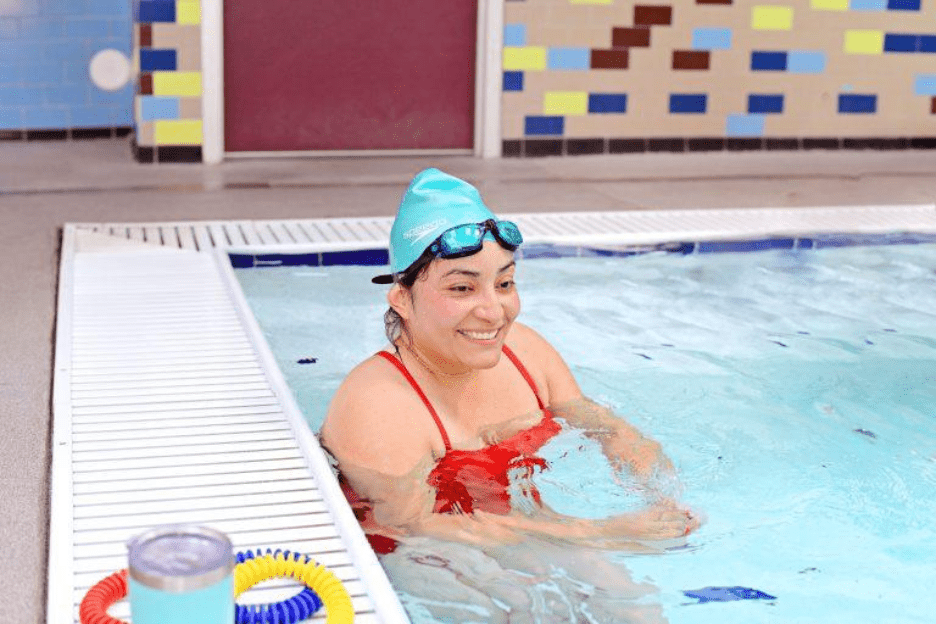
You can want adult swim lessons and still feel uneasy about entering the pool area. Begin with a conversation before promising to complete a particular activity.
For a Chandler beginner, the first plan should explain support, communication and pace. Describe what feels difficult without putting yourself on a weekly confidence deadline.
Key Takeaways
- Describe the difficult part.
- Confirm format and support.
- Agree how to request a pause.
- Review observations without deadlines.
Describe what feels difficult
“I'm nervous about swimming” can mean different things. You may feel uncomfortable near the edge, dislike water on your face, worry about not touching the bottom or feel self-conscious learning around others.
You can ask for help choosing a class without sharing your whole personal history. Describe what the instructor needs to know to discuss the class. For example, say that you haven't learned to swim and want to understand how support is provided before entering.
Avoid treating your concern as a failure to be positive. An instruction to relax doesn't answer a question about the setting, the activity or the help available. Ask for the specific information you need.
Swimming instruction is not diagnosis or treatment for a phobia. If fear or a past experience raises concerns beyond choosing a lesson, seek appropriate professional support rather than expecting a swim class to resolve everything.
Ask about the actual local format
Gold Medal has an Adult Swim program, but you should confirm current eligibility, format and availability for the class you are considering. Don't assume private instruction, a particular accommodation or a dedicated anxiety program from general blog wording.
Ask how many learners share the arrangement, how support is provided and what happens if an activity feels too difficult. Find out whether you can discuss your concern before class and how to signal that you need to pause.
Those answers help you decide whether the class sounds right for you. They aren't a guarantee that you will feel comfortable immediately or progress at the same rate as another learner.
A checklist for the first inquiry
| Detail | What you can describe | What to confirm |
|---|---|---|
| Starting comfort | What currently feels manageable or difficult | How the instructor uses that information |
| Learning goal | A practical reason you want to learn | An appropriate first task or assessment |
| Local format | The program you are asking about | Current class arrangement and location |
| Support question | The concern affecting your decision | What assistance is actually available |
| Illustrative next step | A conversation or visit you might consider | Whether it is offered and suitable |
| Availability | Your workable days and times | An actual place, not an assumed opening |
For a hypothetical adult, the first step might be asking how a class supports someone who is uneasy putting their face in the water. That question doesn't establish that a private class exists or that the person should complete a particular activity in week one.
Agree on communication before a new activity
Ask the instructor to explain a task before you try it. You should understand the purpose, the support available and how to stop or request a change.
Keep the conversation concrete. “What will you ask me to do, and where will you be?” gives the instructor more to answer than “Will I be fine?” If the explanation isn't clear, ask again before beginning.
Your starting point may change once you see the setting. Tell the instructor rather than feeling bound by what you hoped you could do during the inquiry. Assessment and teaching need to reflect the actual learner on the day.
Breathing, balance and movement are learning tasks
An instructor may discuss breathing coordination, supported balance or a simple movement as part of an appropriate progression. The exact task should depend on your starting point and the class arrangement.
Don't turn a breathing discussion into a plan for prolonged underwater breath-holding. You don't need a breath-hold target to show commitment. Ask for an explanation of normal breathing coordination within the activity you are being taught.
Similarly, don't interpret “water supports your body” as an instruction to try an unfamiliar float alone. Ask how the instructor will support the activity and what you should do if you are uncomfortable.
Replace deadlines with observations
A week-one, week-two and week-three plan can sound like a promised timetable even when it is only an illustration. A better record is what you attempted, what support was present and what question remains.
For example, you might feel able to discuss a task after observing it, while still choosing not to attempt it yet. That is information for the next teaching conversation, not evidence that you are behind schedule.
When you do attempt something, ask what the instructor observed. A familiar activity feeling more manageable can be worth noting, but it doesn't prove readiness for deeper water or a different setting.
Keep your goal in view without making every lesson a test. If your goal is family recreation, the instructor can help explain which skills still need work and what conditions remain outside the assessment.
Check that support means what you think it means
Words such as “beginner,” “supportive” and “individual attention” can describe different arrangements. Ask the school to explain them in terms of the actual class rather than assuming they mean one instructor working only with you.
If you need an explanation before attempting a movement, say that. If you want to know how the group works while one learner receives help, ask. These are questions about the teaching arrangement, not demands for a promised result.
Make a note of what you've learned and what you still need to ask. You may learn that a format is suitable, that another conversation is needed or that the available option doesn't meet your needs. Each is useful information before committing. Don't let a reassuring phrase stand in for an unanswered practical question.
Adult beginnings
Use starting to learn swimming as an adult to consider adult learning as a sequence of supported steps rather than an age deadline. Use setting a personal reason to learn swimming as an adult to connect the decision to begin with an activity the learner wants to do.
You can bring the same questions back after beginning if the arrangement differs from what you understood.
Prepare for the first visit
Confirm arrival, changing and equipment requirements. Ask whether the school wants you to bring goggles or another item rather than assuming an accessory will solve discomfort.
Give yourself a little room to arrive without rushing. Know where to meet the instructor and whom to ask if the arrangement differs from what you expected. A clear practical plan can remove avoidable uncertainty, even though it doesn't promise to remove anxiety.
If you have a health concern affecting participation, discuss it with the appropriate healthcare professional and tell the school what it needs to know. A general blog article can't determine your individual suitability.
Decide whether the arrangement fits
After a conversation or visit, consider whether your questions were answered. Did you understand the activity? Was there a clear way to communicate discomfort? Were the support and expectations explained accurately?
If something didn't feel like a good fit, try to put your finger on why. Ask what alternatives are actually available instead of assuming the only choice is to push through or give up entirely. Don't infer that a previous unsuccessful experience makes every future class unsuitable.
A routine can help you return to learning, but frequency should be discussed rather than prescribed here. More sessions aren't automatically the answer to a mismatch in format or support.
Make the first support question specific
Ask where the instructor will be during an activity or how to request another explanation. These are specific teaching questions, not a demand for a promised outcome. A class arrangement and clinical anxiety treatment remain different matters.
Begin with a useful conversation
A useful inquiry does not require you to sound confident. It should help you understand whether the teaching arrangement fits your starting point.
Bring the concern that matters most and ask for a specific explanation. The next step can be manageable without promising to erase anxiety.
Frequently Asked Questions
Do I have to enter deep water straight away?
Ask how placement and instruction work before booking. Don't accept a generic promise about every beginner's first activity; the instructor needs to understand your ability and the setting.
How long will it take to feel confident?
There isn't a reliable timetable for every learner. Discuss a suitable task and review what actually happens rather than expecting improvement within a fixed number of weeks.
Are private lessons available?
That isn't confirmed by this guide. Ask the school about current formats and which arrangements could meet your needs.
Ask Gold Medal Swim School about current Adult Swim support and class options in Chandler.
